
The Call Nobody Noticed
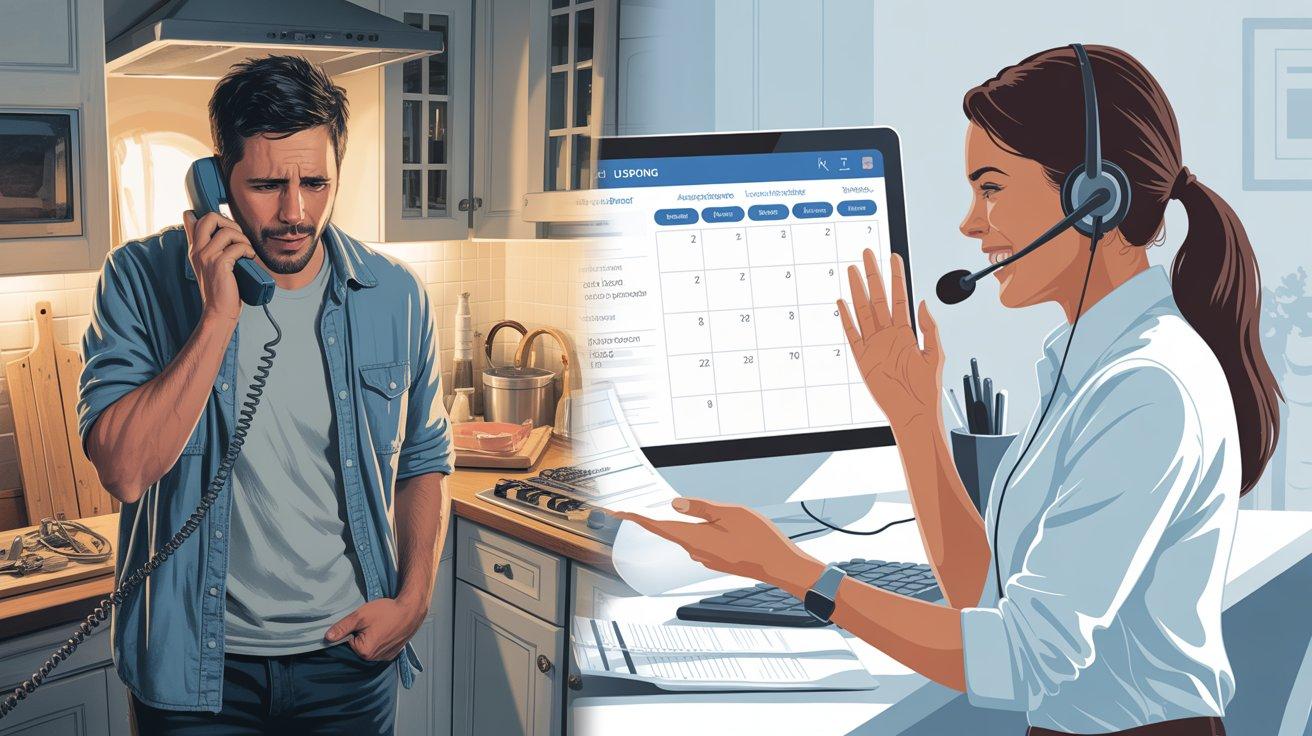
It was a Friday afternoon in South Texas. A homeowner's water heater had stopped working — no hot water, two young kids, company coming over the weekend. She picked up her phone and dialed the first plumber she found on Google. Someone answered.
But the moment she began explaining the problem in Spanish, the line went awkward. Halting English. A long pause. Then: "Sorry, I don't understand." She hung up.
Called the next number. Same result. Third number — someone answered, said "Un momento," and handed the phone to a bilingual colleague. Forty minutes later, she had a booked appointment and a technician on the way.
The first two plumbers never knew she called.
They never saw her in a report. She didn't leave a voicemail. She just disappeared — and took a $700 job with her.
This kind of invisible revenue loss happens dozens of times a week in any metro market with a significant Hispanic population. And for home service businesses operating in Texas, Florida, California, Arizona, or anywhere else with a growing Spanish-speaking homeowner base, it's a problem that compounds quietly until someone finally runs the numbers.
The Size of the Market You May Be Ignoring
The US Hispanic homeownership market isn't a niche demographic — it's one of the fastest-growing homeowner segments in the country.
Hispanic households added a record 441,000 new homeowners in 2025, reaching a historic 10.2 million owner-households — the largest single-year gain on record, at a time when most other groups declined. Latinos also drove 92.6% of new US household formation that same year.
These are homeowners. They have furnaces, water heaters, electrical panels, and roofs. They need HVAC tune-ups, emergency plumbing calls, and storm damage estimates. And a significant portion of them — particularly in markets like Miami, Houston, Phoenix, San Antonio, and Los Angeles — prefer or require communication in Spanish.
The data on that preference is unambiguous. Research found that approximately 75% of consumers who speak a language other than English prefer to work with businesses that provide customer assistance in their own language. And when they can't find that, they don't wait around. They move on, and they do it fast.
What "Language Barrier" Actually Means on the Phone
For a homeowner calling with a burst pipe or a dead AC unit, a language barrier isn't an inconvenience. It's a dead end.
Unlike an in-person interaction where body language and pointing fill in the gaps, a phone call collapses entirely when two people don't share a language. There's no way to muddle through. The moment communication breaks down, one of two things happens: the caller tries to push through a frustrating, broken conversation — or they hang up.
Most hang up.
What makes this worse is the urgency factor. Home service calls are almost always driven by a problem the customer needs solved now. A homeowner dealing with no heat in January or a sewage backup doesn't have the patience to negotiate a language barrier. They're already stressed.
They're already comparing three contractors. The one that communicates clearly — in their language — wins the job before the conversation is even over.
And they keep winning. Because Spanish-speaking customers who find a contractor they can trust don't just book one job. They refer friends. They refer family.
In communities where word-of-mouth drives purchasing decisions heavily, landing one bilingual customer can mean five more jobs from their personal network before the year is out.
The Hiring Fix Doesn't Scale
The traditional solution to this problem is to hire a bilingual dispatcher. In some markets, that's the right move — and if you have one, they're probably worth their weight in gold.
But the reality of the trades is that staffing is already one of the hardest problems to solve. Adding a language requirement to an already competitive dispatcher hiring pool makes it harder. And even when you do hire bilingual staff, you face the same constraints: they can't be everywhere, they take breaks, they call in sick, and they go home at 5 PM.
A bilingual dispatcher can't answer the Friday night emergency call. They can't handle the overflow when a marketing campaign drives a surge of new inbound volume. They can't be on two lines at once during a summer heatwave when every HVAC business in your market is flooded with calls.
This is the gap that purpose-built technology is designed to close — not replace human staff, but make sure the language your customers speak is never the reason you lose their business.
What AI Receptionists Can Actually Handle in Multiple Languages
The honest answer to "what languages can AI receptionists speak?" is: it depends entirely on how the system is built and trained.
Generic AI phone tools can technically detect a language, but there's a meaningful difference between a tool that detects a language and one that's actually capable of conducting a fluent, context-aware service conversation in that language.
In a home service context, that distinction matters. A Spanish-speaking caller describing a gas smell, a roofing leak, or a no-cool situation isn't using classroom vocabulary — they're using the specific, colloquial language of urgency. An AI that recognizes the language but can't navigate that conversation is just as useless as an English-only dispatcher.
The most capable systems today handle Spanish fluently for the full call workflow: greeting, problem triage, service area confirmation, appointment booking, and caller data capture. Some also handle Portuguese and other languages common in specific regional markets. The key questions for any contractor to ask before deploying any multilingual AI solution are:
- Does the system understand informal and regional Spanish dialects, or only formal Spanish?
- Can it collect caller information and book into ServiceTitan or Housecall Pro in the same call?
- Does it understand the difference between an emergency dispatch and a routine inquiry — regardless of language?
- What happens if the call exceeds the AI's capability — is there a warm handoff protocol?
These aren't feature questions. They're revenue questions. A multilingual AI that takes a message but can't book the job isn't solving the problem — it's just adding a language to your voicemail.
The Real Revenue Question
Here's the math that most contractors in high-Hispanic-density markets haven't done.
If your service area is 20 to 30% Spanish-speaking households, and your current call handling captures nearly zero of those callers due to language barriers, you have a parallel revenue stream that your competitors are quietly taking — not because they're better contractors, not because they have better reviews, but because they picked up the phone and spoke the caller's language.
Research consistently shows that one in four businesses has lost trade directly due to language barriers — and that's across industries where urgency is lower than in home services. In plumbing, HVAC, and roofing, where the purchase decision happens inside a single phone call, the conversion gap between bilingual and English-only call handling is even steeper.
The after-hours multiplier makes this more acute. As outlined in our piece on missed call costs, 60% of high-intent calls come in outside business hours. Emergency calls don't follow a language schedule. A Spanish-speaking homeowner with a flooded kitchen at 10 PM isn't going to call back in the morning.
They're going to keep calling until someone answers — and understands them.
How Enumsol Approaches This
Enumsol's AI Voice Receptionists are built specifically for the US home services trades, which means the multilingual capability isn't a checkbox — it's engineered around how real service calls actually unfold. The system understands service-specific urgency, works with your existing dispatch software, and captures the same lead data in Spanish that it would in English.
More importantly, deployment starts with an audit of your actual call data. If a significant portion of your missed or abandoned calls are coming from Spanish-speaking callers in your market, that gap is identified before a single workflow is built. The solution is sized to the actual problem — not a generic template.
The result is the same whether a caller speaks English or Spanish: a call answered in under two seconds, a problem qualified, and a job booked.
Conclusion
The home service market in the United States is changing faster than most contractors realize, and language capability is increasingly the line between capturing a lead and losing it to whoever happens to speak Spanish two listings down the Google results page. With Hispanic homeownership at a historic high and accelerating, and with the majority of those callers preferring service in their native language, the business that treats multilingual call handling as a core operational capability — not an afterthought — is the one that builds a lasting advantage in its market. The question isn't whether your service area has Spanish-speaking homeowners. It almost certainly does.
The question is: how many of them have already called you, heard silence, and booked your competitor instead?
Sources: NAHREP 2025 State of Hispanic Homeownership Report; Urban Institute Language Proficiency and Homeownership Access Study; Answer United Why Service-Based Businesses Need a Bilingual Phone Answering Service More Than Ever; Maxwell 2023 Hispanic American Borrower Report; RISMedia Spanish-Speaking Homeownership Rate Nears 50% Report.