
The Call That Can't Wait Until Morning
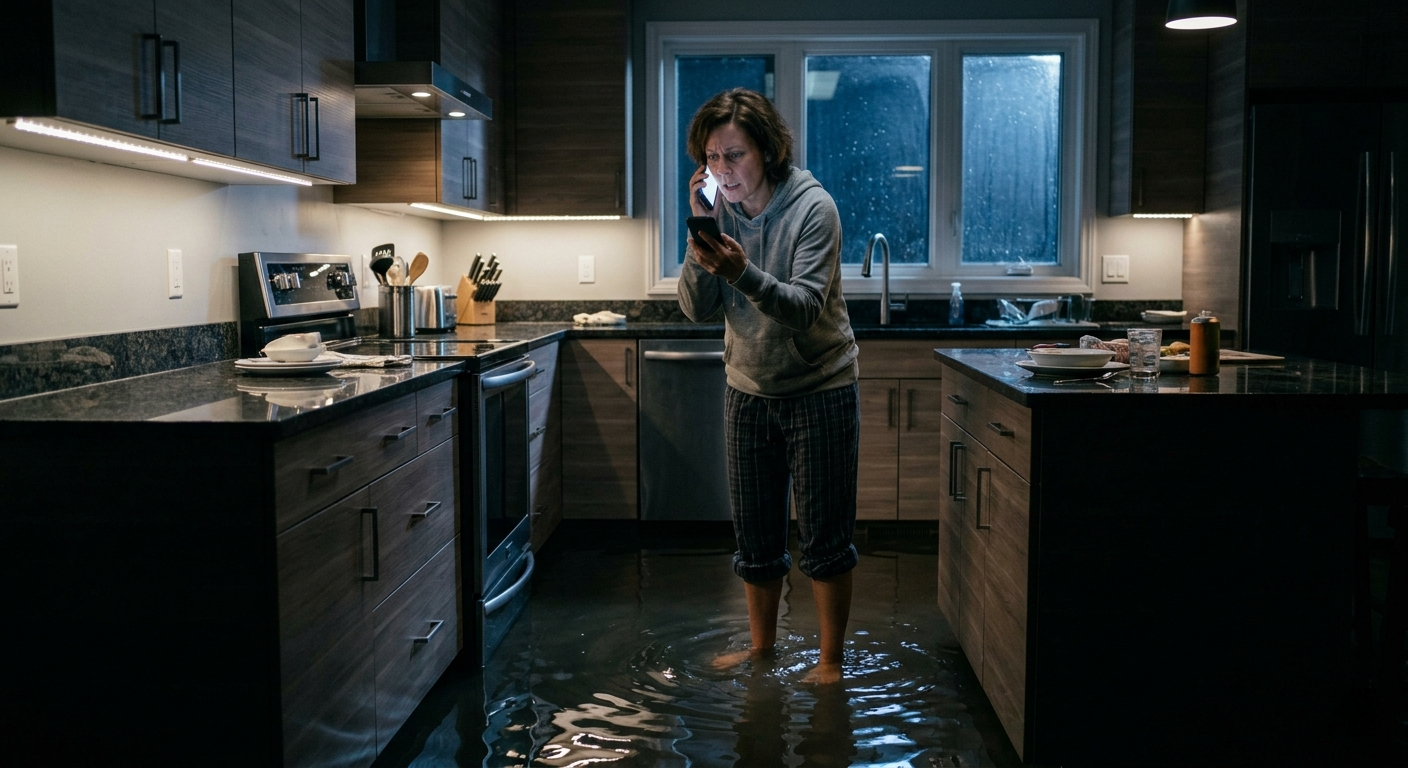
It's 2:14 in the morning. A homeowner wakes up to water running where it shouldn't be. He follows the sound to the utility room — the water heater has cracked, and water is already spreading toward the finished basement. He grabs his phone.
He doesn't open Google slowly. He searches, finds the first plumber with enough reviews to look trustworthy, and calls. If that call goes to voicemail, he hangs up immediately and dials the next number. He will keep calling until someone answers.
The contractor who picks up owns that job — a water heater replacement, possible water mitigation, and a customer who will remember who showed up when it mattered most.
That scenario plays out thousands of times every night across the country. Burst pipes. Failed AC units in August. Electrical panels throwing breakers.
Roof leaks in the middle of a storm. These aren't routine tune-up calls — they're the highest-urgency, highest-value contacts a home service business receives. And for most contractors, they're rolling straight to voicemail after 6 p.m.
Emergency Calls Are Your Most Valuable — and Most Vulnerable — Leads
Let's be clear about what's at stake when an emergency call goes unanswered.
A routine maintenance call might be worth a few hundred dollars. An emergency dispatch — a system failure, a flooded basement, a panel that's tripping breakers before a family event — often turns into a job worth several thousand dollars, and in many cases, a full system replacement worth $10,000 to $20,000 or more. These are the calls that move the needle on monthly revenue. They're also the calls that come in at 11 p.m.
on a Friday.
According to Invoca Research, 60% of high-intent calls to home service businesses occur outside of standard business hours. That means the majority of your emergency call volume — the calls placed by customers who need someone right now — arrives when your office is dark, your dispatchers are home, and your phone routes to a voicemail box that most callers will never leave a message on. Industry data from CallRail confirms that voicemail abandonment in home services is exceptionally high — most callers hang up within the first few seconds and immediately move to the next option.
The job isn't lost because your marketing failed. It's lost because no one answered.
Speed-to-Lead Is the Only Metric That Matters in an Emergency
In a standard service call, a customer might tolerate a callback the next morning. In an emergency, they will not.
The MIT Lead Response Management Study, conducted by Dr. James Oldroyd, found that the odds of successfully reaching and converting an inbound lead drop by over 80% if you wait even five minutes to respond. In emergency home service situations, the stakes are even more compressed — a panicked homeowner with a flooding basement is not going to wait an hour for a callback. They're going to call the next number the moment your line doesn't answer.
Harvard Business Review research reinforces this: companies that respond to leads within the first minute see dramatically higher conversion rates than those responding within an hour — and those responding within an hour outperform those who take longer. In the trades, where emergency intent is immediate and the decision window is measured in seconds, first response is almost always final response.
The contractor who answers first wins the job. That's not a competitive advantage. That's the entire game.
Your Dispatchers Are Not Built for 2 a.m.
This is the part most business owners already know but rarely say out loud.
You have good people running your dispatch operation. They know your service area, they understand the difference between a priority call and a routine inquiry, and they're the backbone of how your trucks get routed efficiently. But they are human beings — they go home, they sleep, they get overwhelmed during campaign surges and storm events, and they cannot realistically staff a phone line twenty-four hours a day, seven days a week.
When emergency calls stack up against routine inquiry volume — especially during peak seasons, weather events, or immediately following a marketing push — the result is predictable: long hold times, missed calls, and leads that slip through because your best dispatcher is already handling four things at once.
According to 411 Locals industry research, the average home service business loses between 25% and 40% of inbound calls during high-volume periods, not because of poor intent, but because of staffing limitations that can't scale on demand. A burst pipe at 10 p.m. doesn't care that your team has already handled eighty calls today.
What Emergency Call Handling Actually Looks Like
When a homeowner calls at midnight with a plumbing emergency, the call needs to accomplish three things immediately: confirm that the business serves their location, determine the urgency and nature of the problem, and move the customer toward a booked appointment or dispatched technician — not a voicemail box.
This is where a properly configured AI voice receptionist earns its keep. Rather than routing to a recording, the call is answered in under two seconds. The system identifies whether the situation is an emergency dispatch, a warranty inquiry, a new installation inquiry, or a routine service request. For genuine emergencies — a pipe burst, a total system failure, a safety concern — the call is prioritized and escalated accordingly: the customer's information is captured, the nature of the problem is documented, and the appointment is booked directly into your dispatch platform.
Enumsol's AI Voice Receptionists are built specifically for this triage workflow in the trades. The system understands the difference between a homeowner calling to schedule an annual tune-up and one whose basement is filling with water at midnight — and it responds to each call type with the appropriate urgency and protocol, twenty-four hours a day, without staffing overhead.
The customer on the other end of the line doesn't experience a generic phone tree. They experience an immediate, competent response at the exact moment they're most likely to hire.
What This Looks Like in Real Numbers
Abstract concepts about missed revenue are easy to dismiss. Documented outcomes are harder to ignore.
An HVAC contractor running mid-volume operations saw a 58% increase in after-hours booked jobs within 90 days of deploying a structured after-hours call protocol — the direct result of capturing emergency and late-evening calls that had previously gone unanswered. A residential plumbing operation saw a 4.3x increase in qualified emergency calls captured per week, simply by ensuring that no inbound call — regardless of the time — reached a voicemail box. A roofing contractor responding to storm-season lead surges reduced their speed-to-lead time by 40% on high-value estimate calls, meaning more jobs quoted and more jobs won before competitors could respond.
These aren't projections. They're outcomes measured against a real baseline, in real businesses, with real truck rolls as the unit of success.
Finding the Leak Before Patching It
Here's what most contractors get wrong when they try to solve this problem: they invest in a solution before they understand the scope of what they're losing.
The right starting point isn't deploying a new system. It's auditing thirty days of your call log data to identify exactly where calls are abandoning, which time windows carry the highest missed-call rate, and what the revenue value of that lost volume actually represents. For most mid-to-high volume operations, this audit reveals a number that is significantly larger — and more specific — than the business owner expected.
Only after that audit does it make sense to deploy, test, and measure a targeted solution against a real baseline. Enumsol's AI Voice Receptionists are deployed following this exact audit-first approach, because a solution that isn't grounded in your actual call data isn't a solution — it's an expense.
Conclusion
Emergency calls are not a secondary concern in home services — they are the highest-stakes, highest-value contacts your business receives, and they are arriving at the exact hours your operation is least equipped to answer them. The revenue isn't missing because customers aren't calling. It's missing because the calls aren't being answered, the voicemails aren't being left, and the jobs are being booked by whoever picked up second.
The math is straightforward. The fix is measurable. The only question worth asking is: how many emergency jobs went to your competitor last month while your phone was ringing in an empty office?
Sources: 411 Locals Industry Study on call abandonment rates during high-volume periods in home service businesses; the Granite Comfort case study documenting after-hours booking outcomes; Aire Serv after-hours booking performance data; the CallRail Benchmarking Report on voicemail abandonment and missed call rates in local service businesses; and CustomerFlows Home Service Business Statistics 2026 on average job values and emergency call conversion behavior.