
The Number Nobody Wants to Calculate
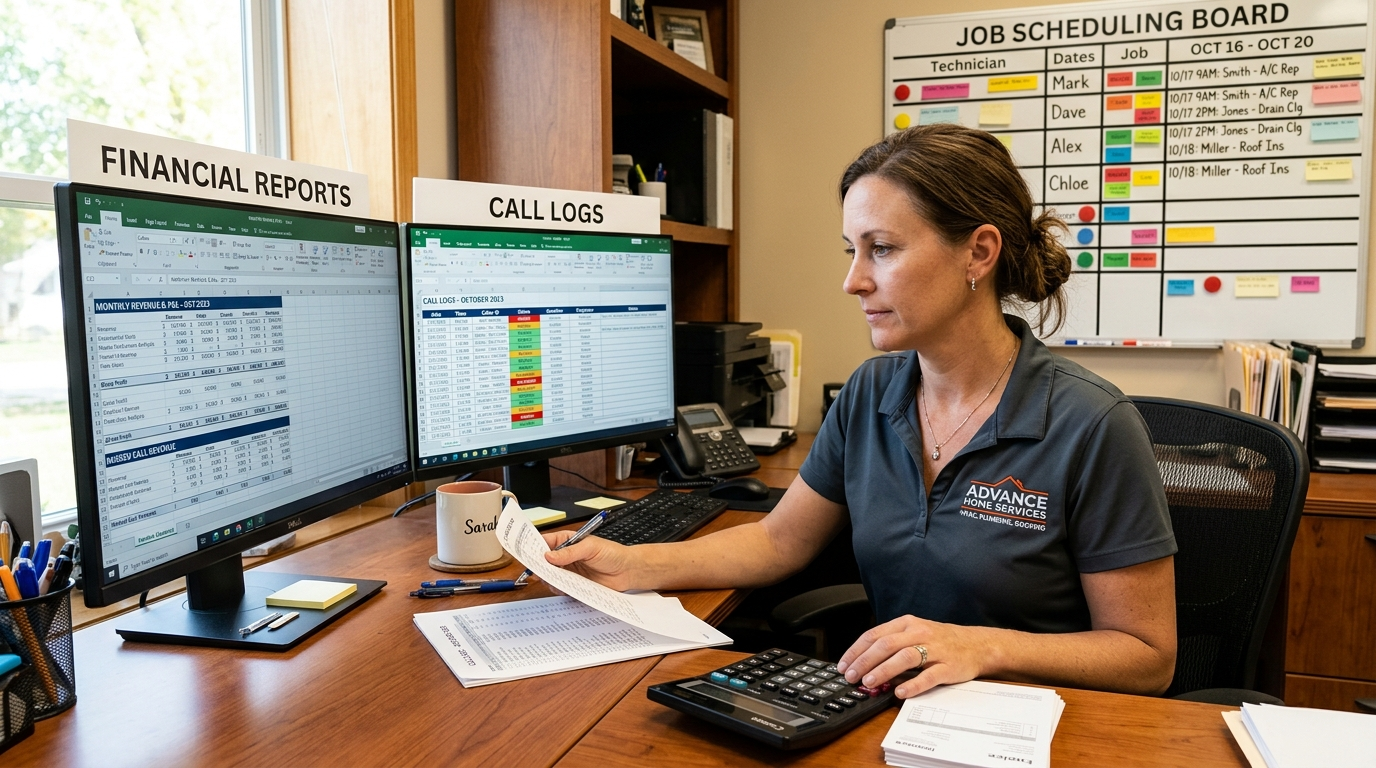
Jason runs a seven-truck HVAC company in the Southeast. Good reviews, steady referrals, and a Google Ads budget that his marketing agency told him was performing well. Last spring, his ops manager sat down with 30 days of call logs and did something Jason had never done before: she counted the missed calls. Not the ones flagged by the phone system — the ones that rang, hit voicemail, and produced no callback record.
She cross-referenced them against the inbound windows — evenings, early mornings, weekends — and estimated the job value based on the types of calls that typically came in during those windows.
The number she came back with stopped Jason mid-sentence. In a single month, the business had potentially missed between $60,000 and $80,000 in revenue — not from bad marketing, not from poor service, but from calls that rang out with no answer. Leads that had already been generated. Customers who were already ready to book.
Money that was already in the market — and went to a competitor who picked up the phone.
This is the conversation most home service owners avoid. Not because the math is hard, but because once you do it, you cannot un-see it.
The Real Question Is Not What It Costs. It Is What You Are Already Losing.
When most contractors think about adding any system to their business, they start with cost. What does it run per month? What is the setup fee? How long until it pays off?
These are reasonable questions — but they are the wrong starting point for this particular conversation.
The right starting point is the number on the other side of the ledger. Before asking what structured call handling costs, ask what your current setup is costing you. Because the math almost always reveals that the status quo — voicemail, missed after-hours calls, dispatcher overflow, slow follow-up — is the most expensive option on the table.
Consider the baseline. According to home services industry research, the average cost per lead in trades categories like HVAC, plumbing, and roofing ranges from $40 to $150 depending on the market and the channel. That is what you pay every time the phone rings with a qualified prospect on the other end. When that call goes to voicemail and the customer hangs up — which call analytics research shows happens approximately 80% of the time — you have paid for a lead that produced zero revenue.
You did not just miss the job. You paid to miss it.
Multiply that across a week. Across a month. Across a year. The number is significant before you have even factored in the job value of what was lost.
The Missed Call Calculator Every Contractor Should Run
The financial case for structured call handling in home services is built on four numbers that every business owner can estimate from their own operation.
The first is average job value. In HVAC, a service call averages between $200 and $500, a system repair between $500 and $2,000, and a full system replacement between $5,000 and $15,000. In plumbing, emergency repairs typically range from $300 to $3,000. In roofing, a full replacement averages $8,000 to $20,000.
These numbers vary by market, but every contractor knows their own averages.
The second is weekly missed call volume. This is the number most owners do not know precisely — but it is measurable. Call logs, voicemail records, and inbound tracking data can produce a reliable estimate within a few days of review.
The third is conversion rate. Not every answered call becomes a booked job, but industry benchmarks for home service inbound calls suggest conversion rates of 60 to 80 percent when calls are answered live, compared to conversion rates that drop sharply when calls go to voicemail or are returned hours later.
The fourth is the speed-to-lead multiplier. Research from the Lead Response Management Study found that businesses responding to inbound inquiries within five minutes are 100 times more likely to qualify the prospect compared to those who respond 30 minutes or later. In home services, where customers are often calling multiple contractors simultaneously, responding fast is not a courtesy — it is the primary competitive variable.
Plug your own numbers in. For most mid-volume operations in HVAC, plumbing, or roofing, the annual revenue exposure from missed and slow-response calls lands somewhere between $200,000 and $1.5 million. That figure is not a marketing projection. It is money that was already in the market, already calling in, and already gone.
What Your Marketing Budget Is Actually Funding
Here is the version of this conversation that most marketing agencies will never have with you. Every dollar you spend on Google Ads, local service ads, or SEO is generating phone calls. The cost-per-lead in home services is real and measurable. And every time one of those paid leads hits voicemail, you have not just lost a job — you have lost the lead cost, the job margin, and the lifetime value of a customer who will likely never call back.
According to benchmarking data on home services digital advertising, HVAC contractors in competitive markets can pay between $80 and $150 per inbound call lead. Roofing companies in storm-prone markets report similar figures, with lead costs spiking during peak demand windows. Plumbing emergency lead costs through paid search typically run $40 to $100 per call, depending on the market.
When a $100 lead goes to voicemail and the customer hangs up, the economics are straightforward. You paid $100 for a call that produced $0 in revenue and $0 in future customer value. If that happens 15 times a week, you are burning $1,500 per week in paid lead spend with no return — before you have even started counting the job revenue you did not book.
The businesses that run the most profitable operations in the trades are not the ones with the lowest lead costs. They are the ones with the highest close rate on the leads they are already generating. Fixing what happens after the phone rings is almost always a higher-return investment than increasing what you spend to make it ring.
The Hidden Labor Cost: What Your Dispatchers Are Worth Per Hour
There is a second financial dimension to this conversation that most operators overlook entirely: the cost of routing your most experienced people toward low-value call handling.
A skilled dispatcher in a home service operation costs between $18 and $28 per hour in most US markets, not counting benefits and management overhead. Their highest-value work — routing trucks efficiently, managing job escalations, coordinating technicians in the field, handling high-ticket customer conversations — directly affects revenue. When they are spending 30 to 50 percent of their day handling FAQ calls, confirming appointments, explaining service area zip codes, and fielding routine intake calls, that time is not producing the output it should.
Studies on labor allocation in field service businesses consistently find that dispatcher time spent on repetitive, low-complexity call handling is associated with slower response times on high-priority calls and lower overall dispatch efficiency. In practical terms: every hour your best dispatcher spends on routine call volume is an hour they are not spending on the decisions that actually move trucks and close jobs.
The financial implication is twofold. First, you are paying a skilled employee's hourly rate for work that does not require their skill level. Second, the high-value work that only they can do is being deferred, rushed, or missed entirely. Both sides of that equation represent a real cost — and both are addressable.
What a 58% Lift in After-Hours Bookings Is Actually Worth
Abstract percentages are useful for headlines. Dollar figures are useful for decisions. So take the result an HVAC contractor saw — a 58% increase in after-hours booked jobs within 90 days — and translate it into revenue terms.
If that contractor was averaging 20 after-hours bookings per month before the change, a 58% increase means approximately 11 to 12 additional jobs per month. At an average job value of $800 for a service call mix — conservative for an HVAC business — that is roughly $8,800 to $9,600 in additional monthly revenue. Over 12 months, that is more than $100,000 recovered from a single operational gap that previously produced nothing but voicemail.
The plumbing operation that captured 4.3 times more qualified emergency calls per week saw a similarly direct financial translation. Emergency plumbing calls are among the highest-converting inbound call types in home services — customers calling with a burst pipe or a failed water heater are not shopping. They are buying. Capturing 4.3 times more of those calls per week, at even a conservative average job value, represents tens of thousands of dollars in monthly revenue that was previously walking out the door.
These are not projections from a sales presentation. They are the result of a specific operational change — ensuring every inbound call was answered and routed — applied to businesses with real call volume and real job pipelines.
The Audit Is Where the ROI Conversation Starts
The only way to know what structured call handling is actually worth to your specific operation is to start with your actual data. Estimated miss rates and industry averages produce a directional view. A 30-day audit of your real call logs, real missed call patterns, and real inbound volume by time of day produces an exact one.
That audit is the starting point for how Enumsol's AI Voice Receptionists are deployed. Before any solution is built, the call data is reviewed, the revenue exposure is quantified, and a focused proof-of-concept is deployed on a single channel — tested against your baseline before anything is scaled. Every expansion is justified by demonstrated results, not by a projected ROI in a pitch deck.
The financial case for recovering missed call revenue is not complicated. The leads are already in the market. The marketing has already been paid for. The only variable is whether the phone gets answered — and whether the job gets booked.
Conclusion
The ROI of structured call handling in home services is not a technology story. It is an arithmetic story. Count the calls you are missing. Multiply by your average job value.
Subtract what you are spending to generate those calls in the first place. The number that is left is the revenue that already exists in your market and is currently going to a competitor who answered the phone.
Most home service owners who run this math for the first time are surprised by the result. Not because the calculation is complex, but because the gap between what the phone is generating and what the business is actually capturing has been invisible — right up until the moment someone counts it.
The leads are already calling. The marketing dollars are already spent. So the real question is not whether you can afford to fix the phone — it is how much longer you can afford not to?
Sources: Bureau of Labor Statistics Occupational Employment Data; Angi Pro Insights Home Services Industry Report; WordStream Home Services PPC Benchmarks; CallRail Home Services Benchmarking Report; ServiceTitan Contractor Benchmarking Report; BrightLocal Local Services Consumer Survey.